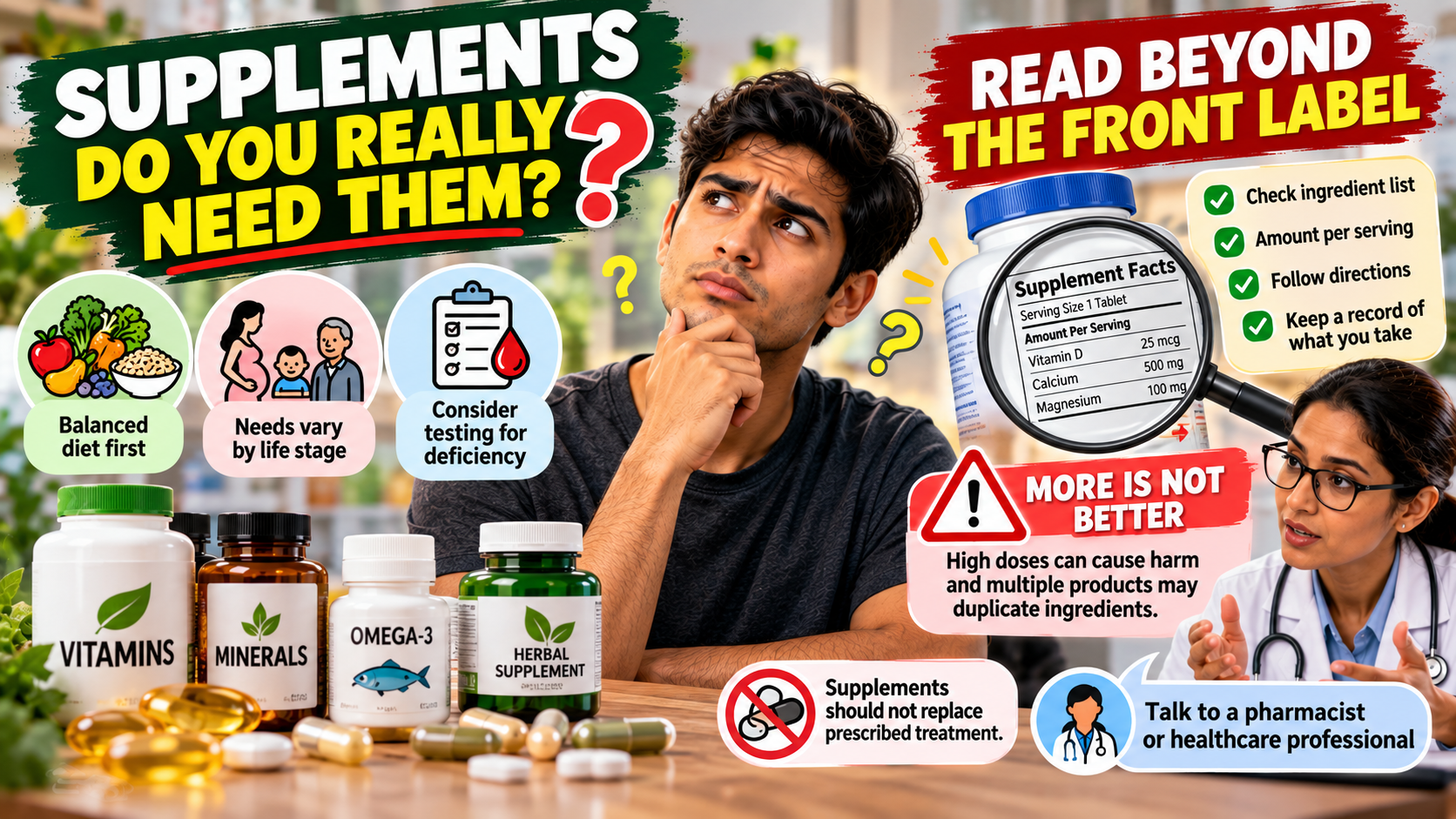
Supplement shelves offer many promises. The most useful question is not which product is popular, but whether you have a specific need that a product can safely address.
Begin with your own context
A balanced diet can cover many nutritional needs, but some people need additional nutrients because of diet, life stage, or a diagnosed deficiency. A professional can help determine whether testing or supplementation makes sense for you.
More is not automatically better. High doses of certain vitamins and minerals can cause harm, and taking multiple products may duplicate ingredients without you noticing.
Read beyond the front label
Look at the ingredient list, amount per serving, and directions. Keep a record of what you take, including herbal products, and share it with your healthcare team so they can check for possible interactions.
Supplements should not replace prescribed treatment. If you are pregnant, managing a condition, or taking medicine, ask a pharmacist or clinician before adding a new product.
Key takeaways
- Match a supplement to a specific, well-understood need.
- Check doses and overlapping ingredients.
- Review potential interactions with a qualified professional.
This guide is for general education only. It is not a diagnosis or a substitute for advice from a qualified healthcare professional.