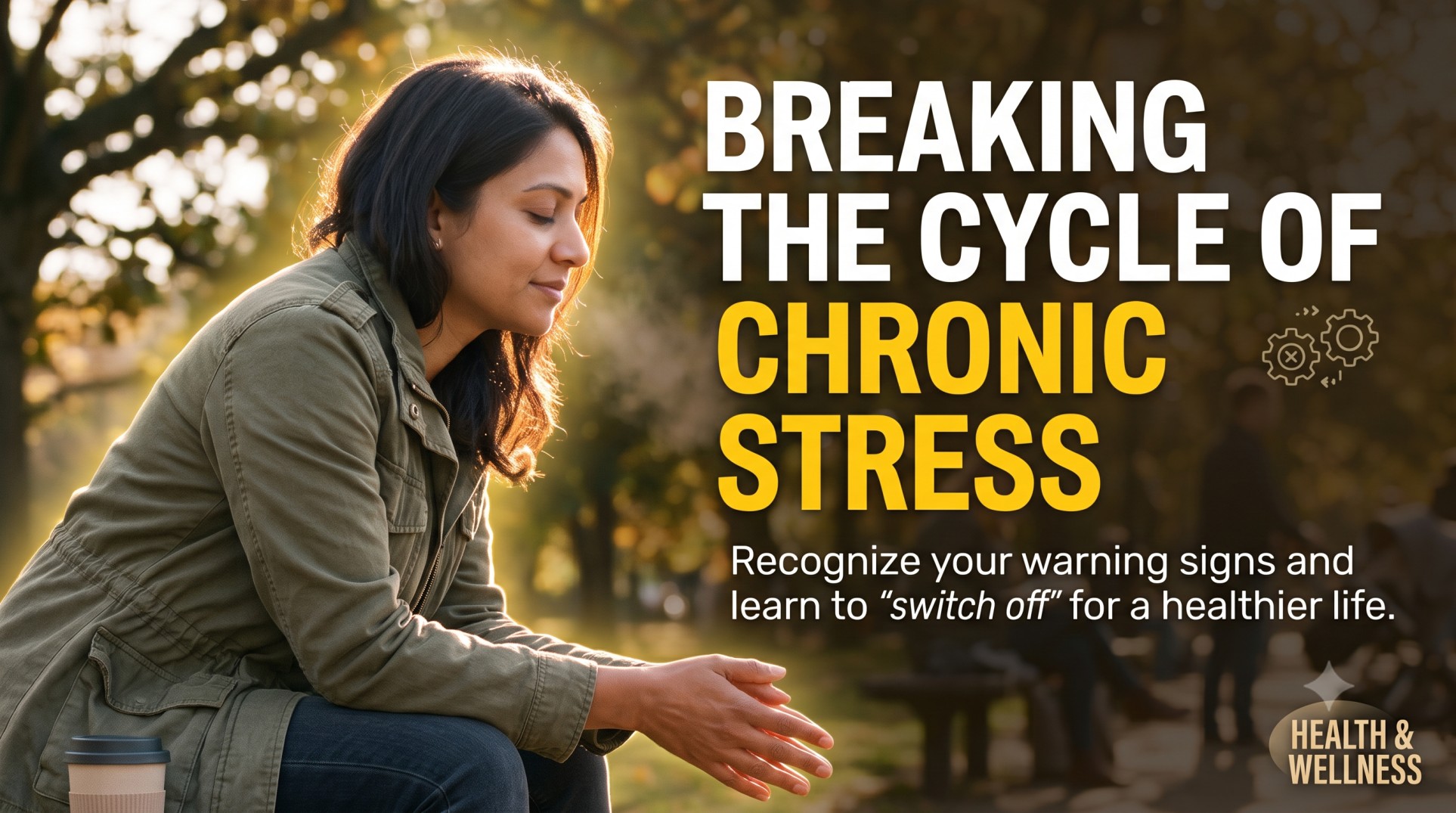
Stress is a normal response to a challenge. When it stays switched on for too long, though, it can shape how you sleep, think, eat, and feel. Understanding your own patterns is a useful first step.
What happens when you feel stressed?
In a stressful moment, your body releases hormones that help you respond. Your heart rate can rise and your muscles may feel tense. That response is useful in the short term, but repeated stress without enough recovery can be tiring.
Stress can show up in different ways: difficulty winding down, headaches, changes in appetite, irritability, or trouble concentrating. These experiences can have many causes, so a symptom alone does not tell you what is happening.
Make room for recovery
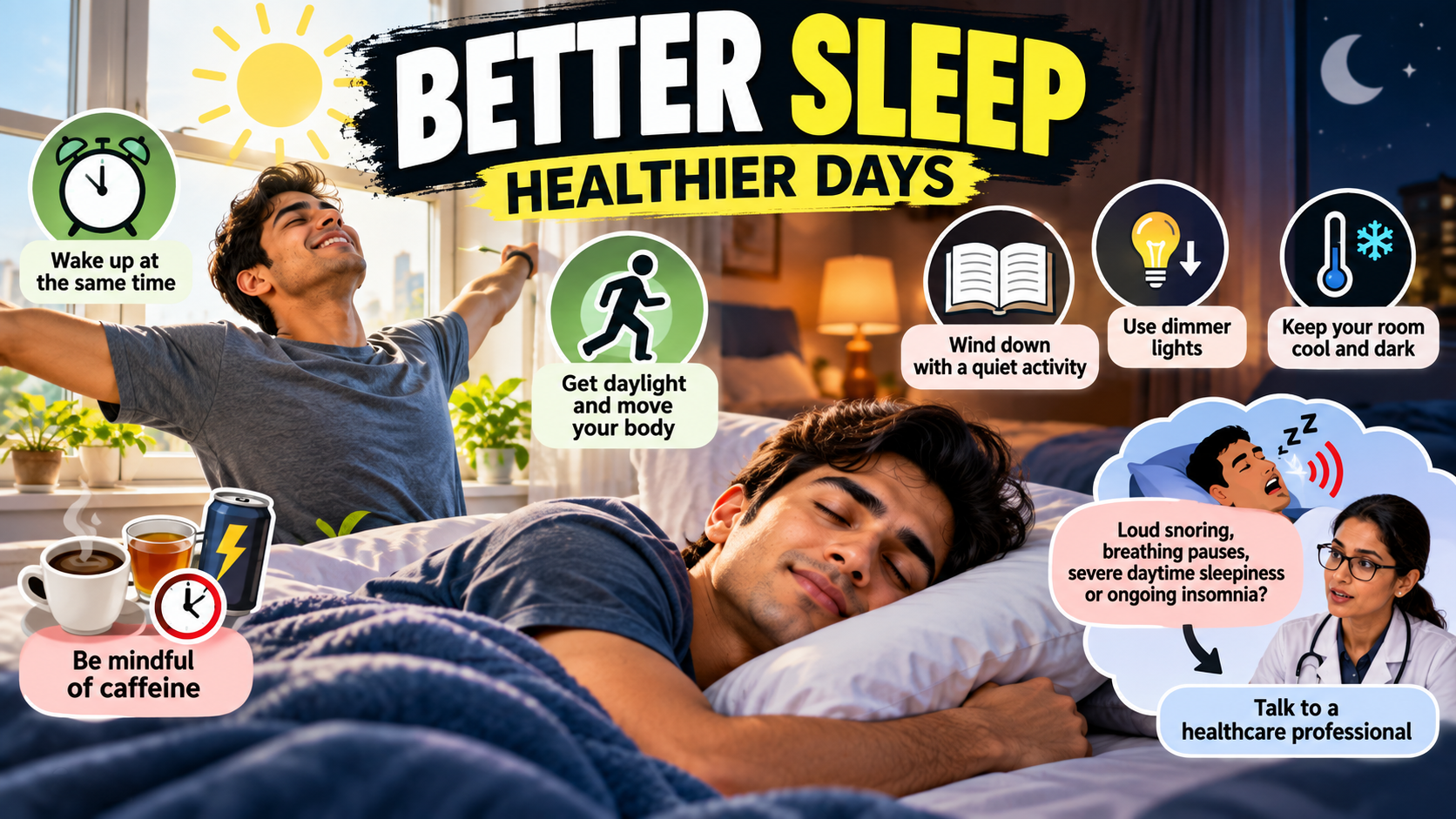
Start with one manageable routine rather than trying to change everything. A regular sleep and wake time, a brief walk, and a pause away from screens can create space to reset. Connecting with someone you trust may help, too.
Notice when stress tends to appear and what makes it easier or harder to manage. If stress is persistent or interfering with daily life, a healthcare professional or mental health professional can help you explore appropriate support.
Key takeaways
- Stress affects both mind and body, and its signs vary from person to person.
- Small, repeatable recovery habits are easier to sustain than an all-at-once overhaul.
- Seek support when symptoms persist or disrupt daily life.
This guide is for general education only. It is not a diagnosis or a substitute for advice from a qualified healthcare professional.